
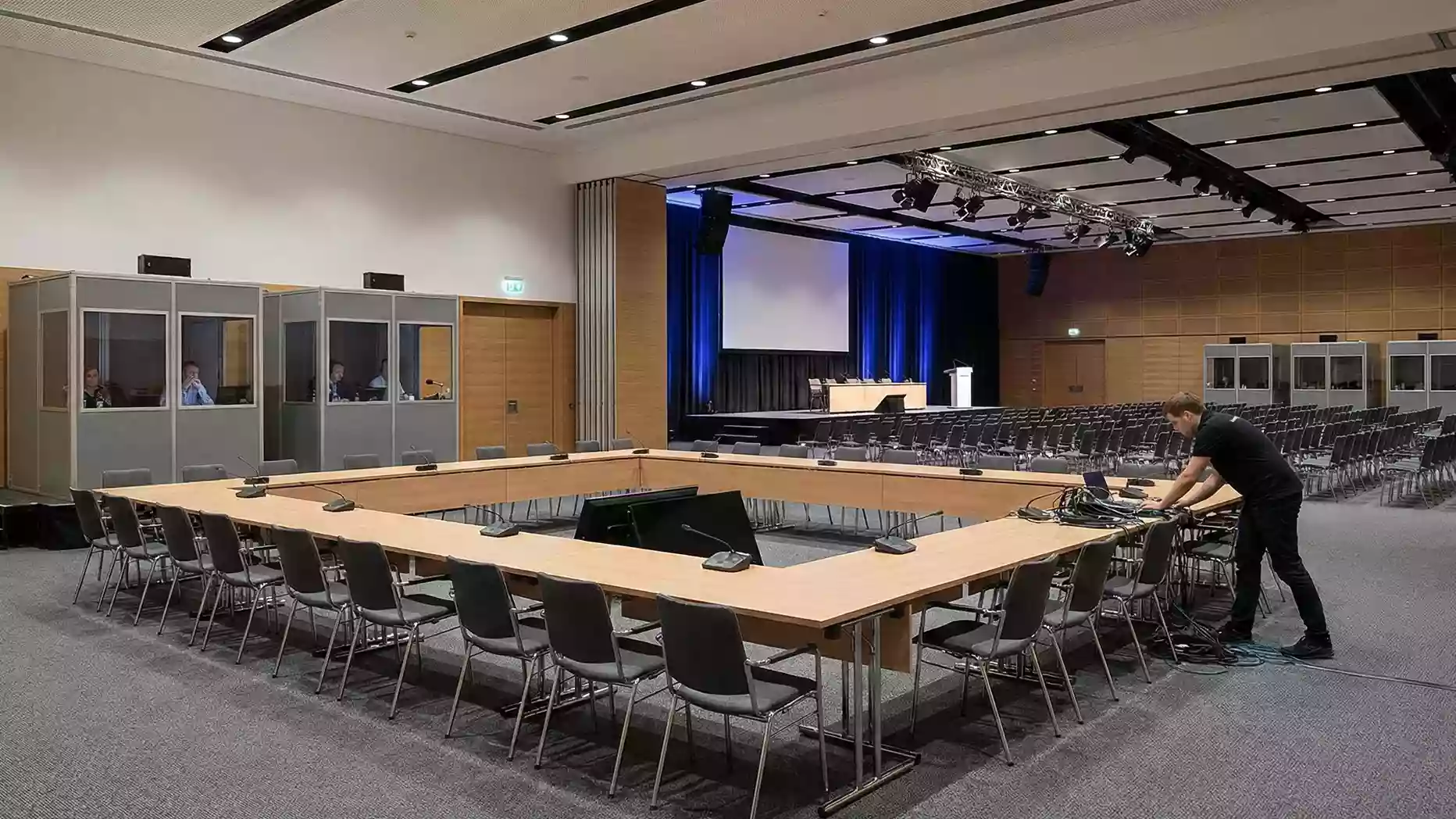
The first time you notice a simultaneous interpretation booth is usually when something has already gone wrong.
A delegate is tapping their headset like it’s faulty, the interpreter is leaning forward with that tight look of concentration, and someone at the back is whispering, “Can they even see the stage?” It’s a small detail that suddenly feels like the whole event.
If you’re planning an international event in the UK, whether that’s a corporate summit in London, a medical conference in Manchester, or a trade exhibition in Birmingham, booth placement is one of those practical decisions that quietly decides whether your event feels calm and professional, or slightly chaotic.
The Short Answer Most Organisers Need First
Place interpretation booths where interpreters have a clear, direct sightline to the speaker and the main screen, keep them close enough to the AV team for quick fixes, and make sure access routes and fire exits stay fully clear. If sightlines are tricky, add a dedicated monitor feed inside the booth.
That’s the foundation. Everything else is just making it work in your specific room.
Why This One Detail Changes The Whole Experience
Interpretation booths are the nerve centres of multilingual events. They are where meaning gets carried across languages in real time, under pressure, for hours at a stretch.
When the booths are positioned well, interpreters can see what matters, hear what they need, and work comfortably enough to stay accurate. Delegates hear clean audio, the room feels controlled, and the event runs as planned.
When the booths are positioned badly, interpreters miss visual cues, strain to hear, or lose precious seconds trying to follow the speaker’s pace. Delegates notice, even if they can’t explain what’s wrong. The event feels less credible, especially in government, medical, or legal contexts where accuracy is not optional.
Before You Move Anything, Get The Booth Basics Right
Interpretation booths are not just boxes you place at the back of the room. They are mini-offices where interpreters sit for long stretches, listening, speaking, and processing complex content without pause.
A standard booth for two interpreters is typically around 6 × 6 ft (1.8 × 1.8 m). The booth itself is only part of the space you need. Plan at least 1 metre of clearance behind the booth so interpreters and technicians can move in and out without squeezing past cables and equipment.
If you’re running multiple languages, place booths side by side in a neat line, with sensible spacing for safe cabling and ventilation. It should feel organised, not improvised.
And if your venue is older (Edinburgh castles, historic halls in Oxford, listed hotels), measure early and carefully. Door widths, tight corridors, and protected features can turn “we’ll just put them over there” into a frustrating on-the-day problem.
Sightlines Are Everything, Because Interpreters Translate People, Not Just Words
Interpreters do not just translate language. They interpret meaning, tone, pace, and body language. That’s why seeing the speaker is critical, not a “nice to have”.
In most rooms, the best position is at the back or along the side wall, as long as there is a direct view to the stage and the main screen. If the room is flat and the audience is seated closely, you may need to raise the booths up to around 1 metre so sightlines aren’t blocked by heads and phones held in the air.
As a practical guide, keep booths within about 30 metres of the presenter or the main screen. Beyond that, interpreters are working harder than they need to, especially if they are relying on screen text or visual context.
Common UK organiser mistakes tend to look like this: booths tucked behind pillars, shoved into balcony corners with awkward angles, or positioned so interpreters have to twist in their chairs for hours. Another classic is placing booths near exits or blocking escape routes, which can put you on the wrong side of fire safety requirements.
If you’re working in large venues like ExCeL London or the NEC Birmingham, where sightlines can be tricky, plan a video monitor feed inside each booth so interpreters always have a clear view of the stage and any slides. It’s a simple upgrade that saves a lot of stress.
Keep Booths Close To Av Control, Because Problems Rarely Wait Politely
Booths do not work in isolation. They are part of your audio system, and they live or die by setup quality.
Position booths close enough to the sound technician’s desk that quick fixes are actually quick. If there’s a fault with a feed, a headset channel, or a console setting, you want your team to be able to trace and solve it without hiking across the room mid-keynote.
Cable runs should be safe, tidy, and planned. Avoid crossing audience walkways wherever possible. Where you can’t avoid it, use proper cable ramps and keep routes out of pinch points. Stable power matters too, especially in busy temporary setups.
If you take only one operational lesson from this blog, take this: test everything in advance. Consoles, microphones, headset channels, volume control, and any backup feeds should be checked before the room fills. The keynote is not the moment to discover a hum on the line.
A Quick Uk-Specific Reminder About Power
Heritage venues in Bath, York, and Cambridge often have limited sockets, awkward power routes, or restrictions on where you can run cables. Bring the practical extras: extension leads, adapters, and spare cables. It is not glamorous, but it prevents a lot of panic.
Plan For Interpreter Movement, Because They Switch Often
Interpreters usually rotate every 20 to 30 minutes. That means people are stepping in and out throughout the day, and they need to do it without walking through the audience or drawing attention.
Give interpreters a discreet access route so they can swap smoothly. Keep that route away from noise hotspots like kitchens, bars, service corridors, or loud doors that slam. If you’re moving equipment cases, make sure corridors are wide enough to manage it safely; around 1.5 metres is a sensible working minimum.
This is also where many layouts fail quietly. The booth looks fine, the view looks fine, but the access route is awkward, noisy, or disruptive. It wears everyone down over the course of a long day.
Standards Matter More Than People Admit
If you want your event to feel genuinely professional and to meet expectations for higher-stakes audiences, follow recognised standards for booths.
ISO 2603 applies to permanent booths in fixed venues like conference centres and auditoriums. ISO 4043 applies to mobile booths used in temporary setups.
Even if your delegates never mention the standards out loud, many of them can feel the difference between a proper setup and something that looks “nearly right”.
Different Venue Layouts, And Where Booths Usually Work Best
When It’s A Hotel Ballroom
Ballrooms often have low ceilings, pillars, and flexible staging. Booths usually work best along the back wall or one side wall, provided interpreters can see both the speaker and the main screen. If the stage is shallow or the room is wide, a booth monitor feed becomes especially helpful.
Ballrooms also tend to have busy service routes. Keep booths away from staff doors and catering flow, or you’ll end up with constant background noise.
When It’s A Tiered Auditorium
Auditoriums are often easier for sightlines but tricky for access. A rear position can work well, but only if it doesn’t block exits or conflict with venue rules. Side positions can be excellent if the angle to the stage is comfortable and interpreters aren’t forced to look across the room at an awkward diagonal.
In many auditoriums, the most important detail is making sure the booth position does not become a fire safety headache. If it does, you will be moved, often late and under pressure.
When It’s A Flat Conference Room Or Corporate Summit Space
Flat rooms need thoughtful elevation. If interpreters sit at floor level behind a packed audience, they may see nothing but the back of someone’s head. A modest platform often solves this, as long as it is stable and safely accessed.
In these spaces, keep booths close to AV control, because corporate events tend to involve lots of last-minute content changes, speaker swaps, and on-the-fly audio requests.
When It’s An Exhibition Hall
Exhibition halls are noisy, open, and full of competing sounds. Booth soundproofing matters, but placement matters too. Put booths where they are protected from direct ambient noise, away from busy entrances, coffee stations, and high-traffic aisles.
Sightlines can be complicated because stages are sometimes temporary and screens are often suspended. Plan the booth position alongside the stage plan, not as an afterthought.
When It’s A Heritage Venue
Heritage venues are beautiful, and they rarely behave like modern conference centres. Expect restrictions on fixing points, limitations on power, and unusual room geometry.
The best approach here is early planning and gentle realism. Measure access routes, confirm what the venue will allow, and assume you will need creative solutions like discrete monitor feeds, careful cable routing, and extra time for build and test.
A “Snapshot” You Can Use When You’re Making Decisions On-Site
Start by finding the speaker’s sightline and the main screen. From there, choose a booth position that stays within roughly 30 metres, keeps a clear view, and allows safe elevation if needed. Next, confirm a clean route to AV control for cabling and troubleshooting. Then check access for interpreter swaps and verify that no exits, corridors, or walkways are compromised. Finally, confirm ventilation, temperature comfort, and a quiet working environment inside the booth.
If each of those points is true, you’re most of the way to a flawless setup.
The Biggest Mistakes To Avoid, Because They Always Come Back To Bite
Putting booths behind curtains, backstage, or in side rooms tends to isolate interpreters and removes the visual cues they rely on. Forgetting ventilation turns the booth into a hot, stuffy box, and concentration drops fast. Blocking emergency exits is a non-starter in the UK, and it can force a late reposition that derails your whole technical plan. Skipping sound checks is another common failure because poor audio quickly becomes poor interpreting, and delegates will blame the event, not the equipment.
Final Words
Interpretation booths are not the glamorous part of event production. They sit quietly at the edge of the room, doing the work that makes an international audience feel included.
Position them well, and interpreters can do their job with confidence. Delegates hear clearly. Speakers stay on track. The event feels calm, credible, and properly run.
In the UK especially, where professionalism, health and safety, and international credibility matter, booth placement is not just a technical detail, it’s a visible sign that you planned the whole experience properly.
So next time you’re building a room in London, Manchester, Birmingham, or beyond, remember the simple truth: a well-placed booth equals a well-run event.
FAQs
Q1. Do all events in the UK need interpretation booths?
Not always. Smaller meetings can sometimes use portable interpretation booths, especially for one language and short sessions. For conferences, exhibitions, and many government-facing events, booths are typically the expected standard for quality and professionalism.
Q2. How many booths do I need?
Usually one booth per language. If you offer French, German, and Mandarin, you’ll generally need three booths, each with the correct console setup and audio channels.
Q3. Can I use a booth outdoors?
Yes, using mobile ISO 4043-style booths, but outdoor setups need proper weather protection, stable power, and careful audio planning to handle wind and ambient noise.
Q4. Are there UK suppliers for interpretation booths?
Yes. There are UK-based suppliers and specialist interpreting service providers who can supply booths, consoles, headsets, and on-site support. If you’re comparing options, look for providers who understand UK venue constraints and can advise on layout, access, and compliance.