
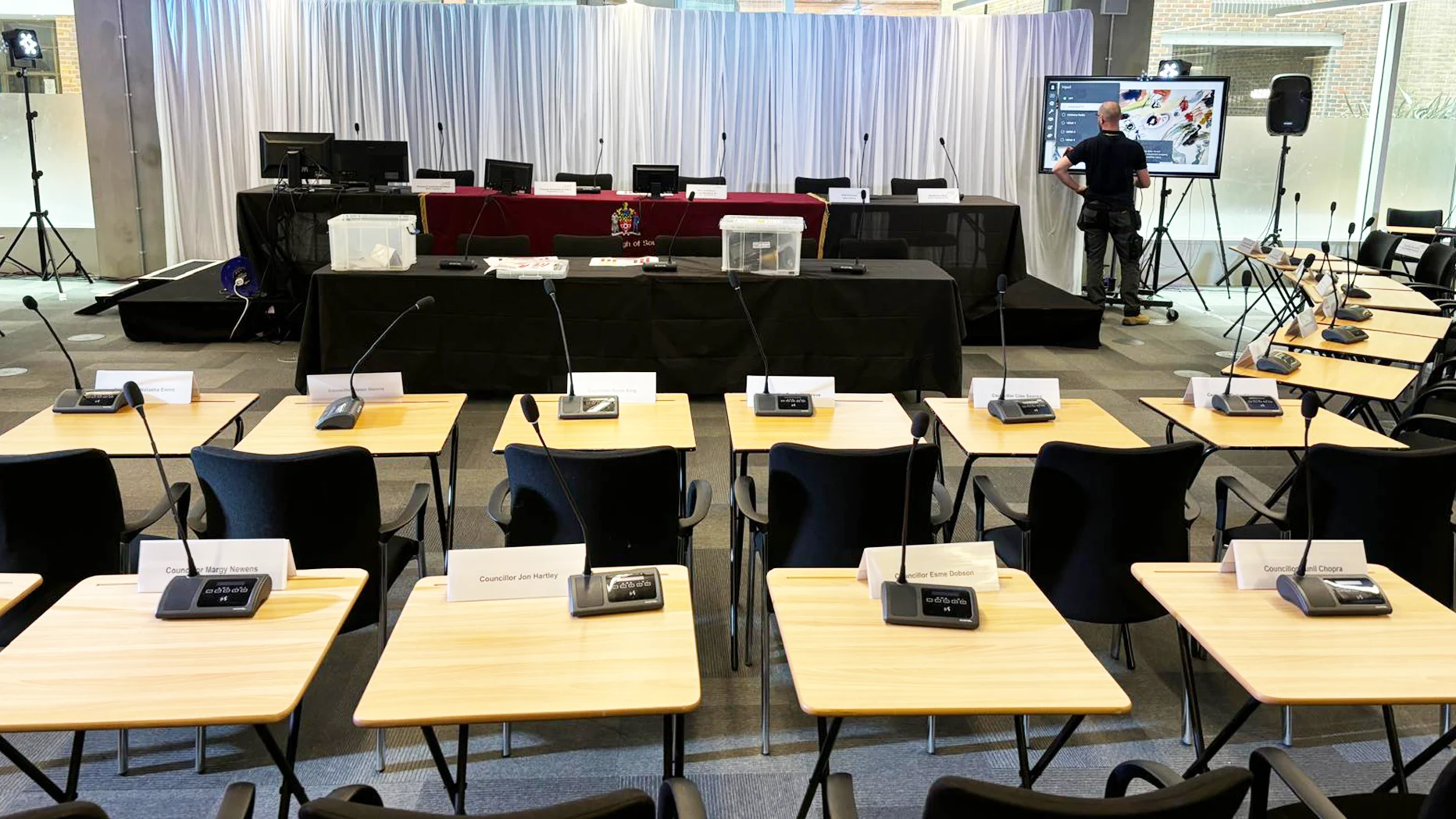
Conference interpreting adapts by changing the interpreting mode, required expertise, and technical setup to suit the event. Simultaneous interpreting fits large, continuous sessions; consecutive interpreting serves smaller, interactive discussions; and whispered or remote options bridge the in-between spaces.
Every event speaks its own language, not just in words, but in rhythm, setting, and scale. What works for a packed summit at ExCeL London won’t suit a high-stakes boardroom negotiation or a live-streamed hybrid meeting.
That’s why conference interpreting isn’t a one-size-fits-all solution. It shifts shape to match the occasion, the people, the pressure, and the pace.
What Does Conference Interpreting Mean?
Conference interpreting helps people from different countries talk and listen to each other in real time. It’s not just repeating words; it’s about keeping the tone, speed, and meaning of what’s said.
In a big conference hall or a small boardroom, interpreters make sure every message is clear and accurate. They focus on helping people connect, not just translate. Companies like EMS Communications support this work by providing the right interpreting systems, such as headsets, microphones, and soundproof booths.
How Do Interpreters Work in Different Venues?
Every room has its own rhythm. A big stage needs strong sound equipment. A small room needs a calm, quiet setup.
Online events depend on stable internet and clear audio.
Interpreters prepare for all of this. They check sound levels, test microphones, and plan where to sit or position their booth.
This preparation keeps the communication smooth once the event begins.
When Should You Use Simultaneous Interpreting?
Simultaneous interpreting happens when the interpreter translates while the speaker is still talking.
Listeners hear the translation instantly through wireless headsets.
It’s perfect for large conferences, global summits, and academic events where the conversation can’t stop for translation.
It’s also useful for diplomatic meetings, where every second counts.
Simultaneous setups usually include soundproof booths, consoles, and wireless headsets, all of which can be hired for the event through EMS Communications.
When Is Consecutive Interpreting a Better Choice?
In smaller, more interactive settings, consecutive interpreting works best. The speaker pauses every few sentences so the interpreter can translate.
This style is often used in business meetings, press events, and technical discussions. It gives time for questions, clarifications, and thoughtful answers. It’s also common in breakout sessions or smaller workshops after main conferences, where participants want to exchange detailed ideas.
This setup is simple, often just a microphone and note-taking, and doesn’t require large equipment.
What Is Whispered Interpreting?
Sometimes, only one or two people need help understanding. In that case, the interpreter sits beside them and quietly whispers the translation while the speaker continues.
This is called whispered interpreting or Chuchotage. It’s useful for guided tours, private meetings, or VIP sessions where a full setup isn’t needed. It’s quiet, personal, and very flexible.
Does the Topic of the Event Affect How Interpreters Work?
Yes, it does. Different subjects need different preparation.
- At medical or scientific events, interpreters study technical terms before the conference.
- At diplomatic or political meetings, they focus on language sensitivity and culture.
- In business settings, they learn company terms, product names, and tone so the translation feels natural.
Event organisers often share presentations, slides, and glossaries before the event, helping interpreters prepare and deliver with accuracy.
What Equipment Is Used for Conference Interpreting?
The right setup depends on the size and type of event.
- Large events: Soundproof booths, transmitters, headsets, and consoles are needed to keep sound clear.
- Small meetings: Only microphones or portable systems are required.
- Hybrid and virtual events: Stable internet and high-quality sound connections are most important.
No matter the format, the goal stays the same: clear sound and reliable equipment for both interpreters and listeners.
Do Interpreters Work Alone or in Teams?
It depends on the type of interpreting.
- Simultaneous interpreting is mentally demanding, so two interpreters usually share the job and rotate every 20–30 minutes.
- Consecutive interpreting has natural breaks, so one interpreter is often enough.
This teamwork helps interpreters stay focused and deliver the best results from start to finish.
How Do Interpreters Prepare for Events?
Preparation starts days before the event. Interpreters review materials, study the topic, and learn about the speakers. For high-level meetings, they’re also briefed on tone, goals, and any sensitive terms.
When both interpreters and organisers prepare well, communication feels smooth, natural, and confident.
How Has Remote Interpreting Changed Events?
Remote interpreting allows interpreters to work from another location using online platforms with live audio and video feeds. This makes it possible for people around the world to attend the same event and still understand each other clearly.
All that’s needed is a strong connection, good sound equipment, and a tested platform, often provided by professional interpretation setup teams in London and across the UK.
Why Is Flexibility So Important in Conference Interpreting?
Every event has its own pace. The interpreter’s role is to adjust to that, whether it’s fast-paced, technical, or personal.
When interpreting fits the moment, everyone feels included and informed. It’s the bridge that keeps ideas moving between people, companies, and countries.
Final Thoughts
Conference interpreting helps people share ideas across languages. Whether in a large conference hall, a small office, or a virtual meeting, the right setup and skilled interpreters make every voice heard.
With good planning and the right interpreting equipment, conferences, exhibitions, and meetings can all run smoothly, allowing ideas to move freely between people and cultures.
FAQs
How do I know which interpreting style to use?
Large events need simultaneous interpreting; small or personal meetings work better with consecutive or whispered interpreting.
Can interpreters work online?
Yes, many interpreters now work remotely through secure online systems.
What setup does a small meeting need?
Usually just microphones and portable headsets.
When should interpretation be booked?
It’s best to book interpretation four to six weeks before the event to allow time for testing and planning.