
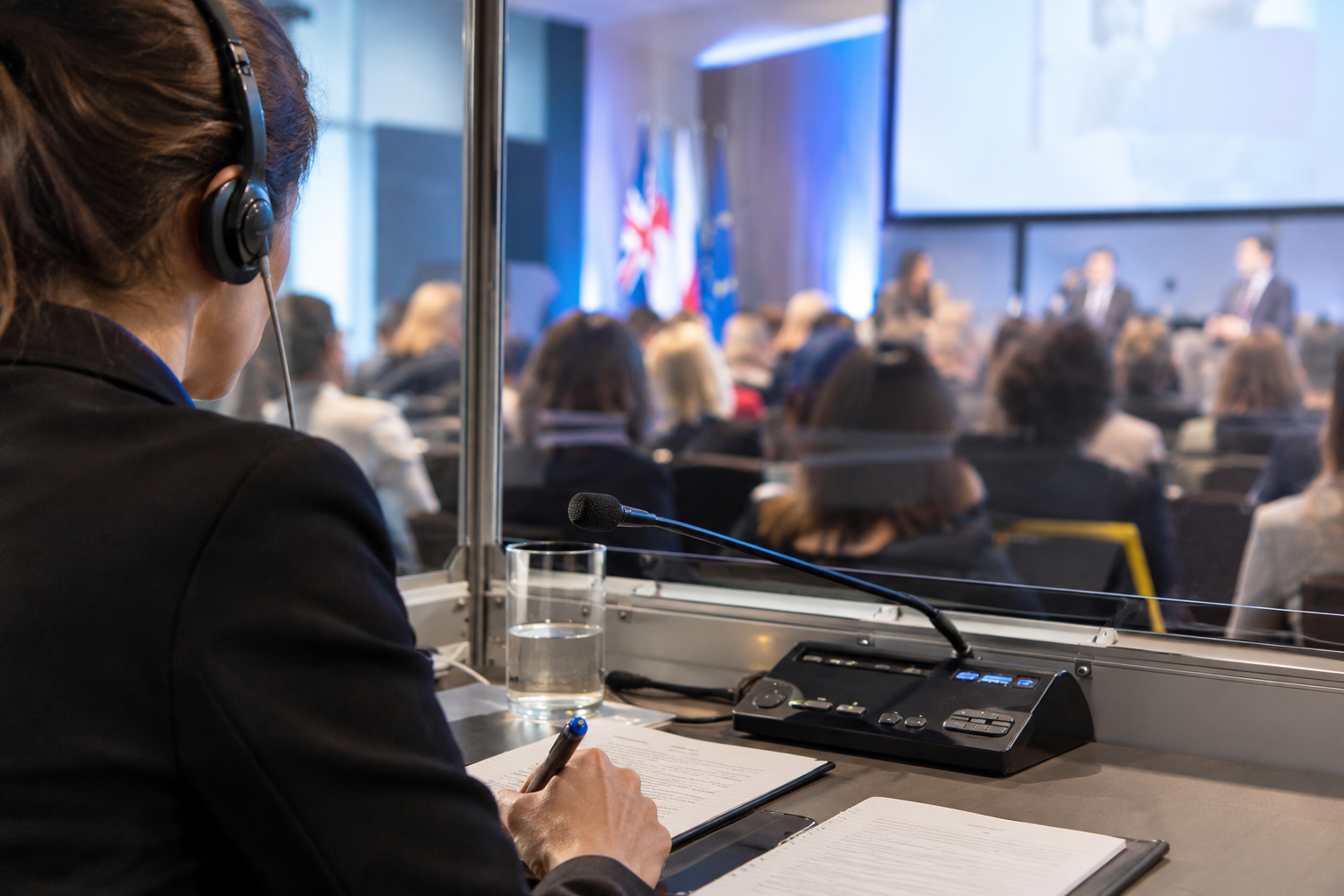
Knowing two languages is not the same as interpreting a live event.
That is the mistake many organisers only understand when the pressure starts. A speaker talks quickly. The subject becomes technical. A joke needs cultural judgement. A delegate asks a difficult question. The room is full, the schedule is tight, and there is no time to pause and “work it out”.
This is where certified professional interpreters matter.
A bilingual colleague may be helpful in a casual conversation. But a conference, AGM, legal meeting, medical congress, product launch or international panel needs more than language knowledge. It needs accuracy, discipline, neutrality and the ability to work live without breaking the event flow.
For organisers, the choice is not really between a “bilingual speaker” and a “professional interpreter”. It is between taking a language risk and protecting the experience for every attendee.
What Are Certified Professional Interpreters?
Certified professional interpreters are trained language specialists who interpret spoken communication accurately, clearly and ethically between people who do not share the same language.
They do more than replace words. They carry meaning, tone, intent and context from one language into another. In live events, that can happen simultaneously while the speaker is still talking, or consecutively after the speaker pauses.
| Skill Area | Certified Professional Interpreters | Bilingual Speakers |
| Language fluency | Tested and developed for professional use. | May be conversational or informal. |
| Interpreting technique | Trained in listening, memory and delivery. | Usually not trained. |
| Neutrality | Expected to stay impartial. | May summarise or influence meaning. |
| Event pressure | Experienced with live event timing and fast speech. | May struggle under pressure. |
| Technical terms | Prepare glossaries and subject vocabulary. | May not know specialist terms. |
| Confidentiality | Work under professional standards. | May not understand formal boundaries. |
| Audience trust | Support clear multilingual access. | Can create uncertainty if errors occur. |
The European Commission’s interpreting service explains that interpreters work with the spoken word, while translators work with written texts. It also notes that conference interpreters convey the speaker’s ideas, not just word-for-word fragments. That distinction is important for live events.
For event organisers, the key point is simple. A bilingual speaker may understand two languages. A professional interpreter knows how to transfer meaning between them in a live setting.
Why Is Being Bilingual Not Enough for Live Events?
Being bilingual is not enough for live events because interpreting requires a separate set of skills beyond speaking two languages.
A bilingual person may speak naturally with family, colleagues or clients. That does not mean they can listen to a fast speech, process it instantly, choose accurate terms, manage tone, stay neutral and deliver the message clearly to an audience.
Interpreting is a performance skill, a language skill and a judgement skill at the same time.
During a live event, the interpreter may need to:
- Listen and speak almost at the same time.
- Understand specialist terms quickly.
- Keep the speaker’s tone and intent.
- Avoid adding personal opinion.
- Stay calm under time pressure.
- Handle accents, speed and poor audio.
- Work with booths, headsets, consoles or remote platforms.
- Protect confidential or sensitive information.
A bilingual speaker who is not trained may unintentionally summarise, soften, exaggerate or miss important points. They may also stop the flow of the event by asking for repeated explanations.
That can damage the attendee experience. It can also affect how international guests view the organiser.
You can also check our guide on simultaneous interpretation and how it works, where the message is interpreted live without pauses that break the event flow.
What Do Professional Interpreters Add to Event Quality?
Professional interpreters improve event quality by making multilingual communication feel clear, equal and smooth for every attendee.
At an international event, language access shapes how people feel about the organiser. If delegates cannot follow the keynote, panel or discussion, they may feel excluded. If the interpretation sounds confident and accurate, they can focus on the message instead of the language barrier.
Professional interpreters support event quality in five important ways:
- Accuracy
They aim to carry the full meaning, not just a loose summary.
- Neutrality
They avoid adding opinion, advice or personal judgement.
- Consistency
They use agreed terminology across sessions, speakers and languages.
- Confidence
They help speakers and attendees trust that the message is being understood.
- Flow
They keep the event moving without repeated pauses or confusion.
This matters most when the event is complex. A technical product launch, investor meeting, government forum, medical conference or legal discussion leaves little room for vague language.
Professional interpreters also prepare before the event. They may review agendas, speaker notes, product names, brand terms, acronyms and industry vocabulary. This preparation reduces mistakes during the live session.
That preparation is one reason organisers should involve interpreters early, especially when the event includes specialist content or several language channels.
Why Do High-Stakes Events Need Certified Interpreters?
High-stakes events need certified interpreters because errors can affect trust, decisions, safety, reputation and business outcomes.
In a low-pressure setting, a small language mistake may be harmless. At a corporate conference, legal meeting, medical event, financial briefing or international negotiation, the same mistake can cause confusion or risk.
A professional interpreter understands that words can carry consequences.
For example:
- A medical congress may include dosage, safety or procedure terms.
- A legal meeting may require exact meaning and neutrality.
- A financial event may include figures, forecasts and commitments.
- A product launch may include technical specifications.
- A board meeting may include confidential strategy.
- A government or diplomatic event may require careful tone.
A bilingual speaker may know the language but not know how to handle these responsibilities under pressure.
ISO 18841 sets out general requirements and recommendations for interpreting services. It covers principles, conditions, qualifications and interpreter competences. That is why event organisers often look for professional language support rather than relying on informal bilingual help.
This is also where technology matters. Clear audio, booths, headsets and interpreter consoles protect accuracy. EMS Communications supports accurate live interpretation with professional interpretation technology, including soundproof booths and specialist equipment designed for live multilingual events.
You can also explore our latest guide on challenges and solutions in simultaneous interpretation to understand why audio quality, preparation and technical support matter.
What Happens When Events Rely on Untrained Bilingual Speakers?
Events that rely on untrained bilingual speakers can face delays, unclear messages, missed meaning and weaker audience trust.
The problem is not that bilingual speakers are unhelpful. Many are highly skilled in their own roles. The issue is that interpreting is a different job.
Common problems include:
- Summarising instead of interpreting: Important details may disappear.
- Adding personal opinion: The message may shift without anyone noticing.
- Missing technical terms: Specialist content may become vague.
- Breaking confidentiality: Sensitive information may not be handled properly.
- Slowing the event: Speakers may need to pause too often.
- Creating uneven access: Some delegates receive a weaker version of the message.
- Increasing speaker stress: Presenters may lose rhythm if interpretation is uncertain.
These issues can make the event feel less professional, even if the staging, sound and content are strong.
In multilingual events, the interpreter becomes part of the audience experience. If interpretation fails, the event does not feel inclusive. It feels divided.
That is why organisers prefer trained language professionals for events where clarity and reputation matter.
How Do Interpreters Work With Event Technology?
Professional interpreters work with event technology by using clear audio feeds, interpreter consoles, microphones, headsets, booths and sometimes remote platforms.
The technology is not separate from the interpretation. It directly affects quality.
If the interpreter cannot hear the speaker clearly, the interpretation suffers. If the microphone feed has echo, delay or dropouts, the interpreter has to work harder. If the booth is noisy, concentration drops. If online audio is poor, remote interpretation becomes risky.
A reliable setup may include:
- Soundproof interpreter booths.
- Interpreter consoles.
- Clear microphone feeds.
- Delegate headsets or receivers.
- Stable audio routing.
- Technical rehearsal.
- On-site support.
- Remote interpretation testing where needed.
EMS Communications uses professional simultaneous interpretation technology, including Bosch equipment, soundproof booths and interpreter headsets that provide clear audio. This helps interpreters work with focus and helps delegates listen without strain.
For event planners, the best result usually comes when interpreters, AV teams and organisers plan together.
When Should Organisers Book Professional Interpreters?
Organisers should book professional interpreters as soon as they know the event needs more than one language.
Leaving interpretation until the last stage creates risk. The best interpreters may already be booked. Glossaries may not be ready. Booth placement may be awkward. The AV team may not have time to test the correct audio feeds. Remote participants may not have the right access instructions.
A good planning process includes:
- Confirming the event languages.
- Deciding if the event needs simultaneous, consecutive or remote interpretation.
- Sharing the agenda and speaker materials.
- Booking the right number of interpreters.
- Confirming booths, headsets, consoles and microphones.
- Testing audio quality before the live event.
- Briefing speakers on pace and clarity.
- Planning support for online or hybrid audiences.
For conferences with many speakers or specialist terms, interpreters need time to prepare. That preparation supports accuracy.
If the event is hybrid, remote simultaneous interpretation may also be needed. We have thoroughly explained how technology is changing language access in our guide on remote interpreting and modern interpreting services.
How Should You Choose the Right Interpreters for Your Event?
You should choose interpreters based on language pair, subject knowledge, live event experience, professional standards and the event format.
Do not choose only by price or availability. Interpretation quality affects the full audience experience.
Ask these questions before booking:
- Do they have experience in your event type?
- Are they suitable for simultaneous or consecutive interpreting?
- Do they understand the subject matter?
- Can they prepare with speaker materials?
- Do they work under confidentiality and neutrality standards?
- Will they need a booth, headset, console or remote platform?
- How many interpreters are needed per language?
- Is technical support included?
Professional bodies and standards exist because interpreting requires more than fluency. AIIC, the International Association of Conference Interpreters, sets professional standards for conference interpreters. The Chartered Institute of Linguists also supports qualifications and professional development for translators, interpreters and linguists.
For organisers, the safer choice is clear. Use bilingual staff for hospitality, informal greetings or simple conversations. Use certified professional interpreters for content that must be accurate, trusted and understood.
Language Skill Is Helpful, But Interpreting Is Professional Work
A bilingual speaker can be valuable at an event. But when people need to understand live content clearly, fairly and accurately, language skills alone are not enough.
Certified professional interpreters bring preparation, ethics, accuracy, neutrality and live event discipline. They help protect the speaker, the organiser and the audience experience.
For multilingual events, interpretation is not a small support task. It is part of how the event feels.
Talk to EMS Communications about professional interpretation equipment and support for your next conference, AGM, hybrid event, product launch or international meeting. Our team can help with simultaneous interpretation technology, soundproof booths, interpreter headsets, delegate receivers and technical support. Contact us to plan a clear, professional multilingual event.
FAQs
What Is the Difference Between a Bilingual Speaker and a Professional Interpreter?
A bilingual speaker can communicate in two languages. A professional interpreter is trained to transfer spoken meaning accurately between languages during live communication. Interpreters also manage tone, terminology, neutrality, confidentiality and time pressure, which makes them more suitable for formal events.
Why Do Events Need Certified Professional Interpreters?
Events need certified professional interpreters when accuracy, trust and inclusion matter. They help international delegates understand the same message at the same time. This is important for conferences, legal meetings, medical events, product launches, corporate briefings and high-level discussions.
Can a Bilingual Staff Member Interpret at an Event?
A bilingual staff member may help with informal conversations, welcome desks or basic guest support. They should not replace a professional interpreter for speeches, panels, negotiations or technical sessions. Live interpreting requires specialist training, preparation and ethical discipline.
What Equipment Do Professional Interpreters Need?
Professional interpreters may need soundproof booths, interpreter consoles, clear audio feeds, microphones, headsets and delegate receivers. Remote interpreting may also require a stable platform, strong internet and tested audio. The right setup helps interpreters hear clearly and work accurately.
When Should I Book Interpreters for an Event?
You should book interpreters as early as possible, ideally once the event languages, agenda and format are known. Early booking allows time to secure the right interpreters, prepare glossaries, plan equipment, test audio and coordinate with the AV or production team.