
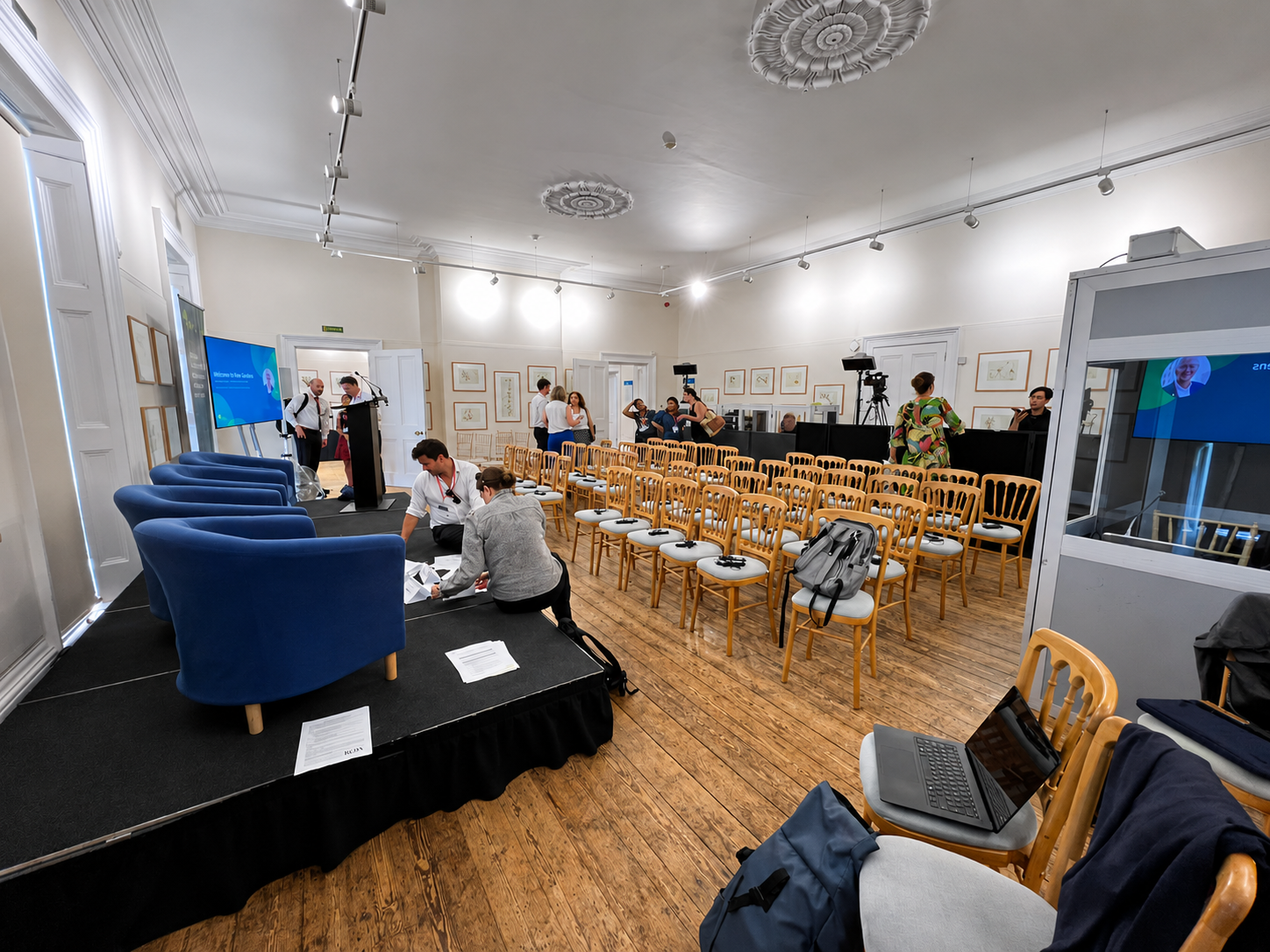
A small fault can disrupt the whole event. If the sound feed is weak, the booth is in the wrong place, the signal drops, or the headsets fail, multilingual delegates can miss key parts of the session. A pre-event interpretation setup audit helps you catch these issues early, protect the flow of the conference, and avoid damage to the guest experience.
The risk often starts after everything seems planned: the venue is booked, the agenda is signed off, speakers are confirmed, and slides are ready.
Has the interpretation setup been checked properly? For many event planners, interpretation sits late in the process. The equipment arrives. The booth goes in. The team assumes it will work. That is where the risk starts. Every conference needs an interpretation setup audit before doors open. It is not a technical extra. It is part of event delivery.
This guide explains what to check, when to check it, and why it matters so much for conferences with multilingual audiences.
What Is an Interpretation Setup Audit?
An interpretation setup audit is a full pre-event check of the interpretation system, the booth position, the audio path, the receivers, the language channels, and the people running it.
In simple terms, you are checking one thing: can every delegate who needs interpretation hear the right language clearly, from the first minute to the last?
That means you are not only checking whether the system turns on. You are checking whether the whole setup works in real event conditions.
That includes:
- Speaker microphones.
- Sound feed into the interpreter console.
- Interpreter booth.
- Transmitter and signal coverage.
- Receivers and headsets.
- Channel labels.
- Sight line to the speaker and screen.
- Readiness of interpreters and technicians.
These issues may not sound dramatic on paper. But if one part fails, the whole service can fail.
| 🚨 The Costly Truth |
| A failed interpretation setup does not just inconvenience delegates. It can lead to formal complaints, reputational damage, and in some cases, legal or compliance issues for events with regulated content. An audit takes less than an hour. The risk of skipping it is far greater. |
Why Should Event Planners Audit Their Interpretation Setup?
Because interpretation is a live service, even a small fault can affect the whole conference. If the audio feed is weak, the signal drops, or the equipment is not set correctly, multilingual delegates can miss key parts of the event. A pre-event audit helps planners catch problems early, protect the attendee experience, and make sure every guest can follow the conference clearly.
To Prevent Technical Failures Before the Event Starts
Interpretation systems have many moving parts. A receiver may have a low battery. A headset may crackle. A console may be on the wrong channel. A wireless system may suffer interference. An infrared panel may leave a blind spot behind a pillar or under a balcony.
None of these problems may sound serious on paper. On the day, they are.
A room full of people cannot stop and wait while the team works out why one language channel has disappeared. A simple audit gives you the chance to test the whole setup before the room is live.
To Protect Sound Quality for Interpreters
Interpreters need clean, stable, direct sound. If the microphone is too far from the speaker, if the feed is distorted, or if background noise leaks into the system, the quality of interpretation suffers straight away.
This matters because interpreters work in real time. They are processing, understanding, and delivering speech at speed. They cannot do that well if the input is poor.
So one of the most important parts of any interpretation equipment check is making sure the interpreter hears a clear signal with the right volume and no noise or dropout.
To Keep Multilingual Delegates Fully Included
At multilingual conferences, interpretation is not a nice extra. It is access.
Delegates who rely on interpretation should be able to listen, follow, respond, and take part without delay or confusion. If the setup fails, they do not just miss words. They miss context, tone, pace, and meaning. That leaves them outside the conversation.
A proper audit helps make sure every delegate can hear the event as it is meant to be heard.
To Handle Last-Minute Changes Without Panic
Conference plans change. A new speaker joins. A panel runs long. A remote contributor is added. A room layout changes. A video clip appears in the final agenda. A floor microphone is added for audience questions.
All of these changes can affect interpretation.
An audit creates time to catch these issues before the session begins. It gives the team a chance to update routing, add equipment, test video and audio, and brief interpreters on new material.
To Protect the Organiser’s Reputation
When interpretation goes wrong, guests notice at once. A weak translation feed or silent receiver can make an otherwise well-run conference feel disorganised. It can cause complaints, frustration, and a loss of trust.
That is why interpretation should be treated with the same care as stage sound, show calling, presentation playback, and room layout. It shapes how professional the whole event feels.
To Make Sure the Team Is Ready, Not Just the Equipment
An interpretation audit is not only about hardware. It is also about people.
The on-site technician should know the system, the channel map, and the backup plan. The interpreters should have the latest agenda, glossary, and speaker notes. The front-of-house team should know how to hand out receivers, explain channel selection, and replace faulty units fast.
When all of that is checked in advance, the event runs with less stress and fewer surprises.
What Can Go Wrong With an Interpretation Setup?
Event planners do not need deep technical knowledge, but it helps to understand the common failure points.
The Interpreter Cannot Hear the Speaker Clearly
If the speaker mic is weak or the feed into the interpretation console is poor, the interpreter is working from damaged input. That affects accuracy and pace straight away.
The Signal Does Not Cover The Whole Room
Some seats may have poor coverage because of room shape, pillars, overhangs, or poor panel placement. Delegates in those seats may lose audio completely.
There Are Not Enough Receivers
If the event underestimates how many delegates need interpretation, some people will be left without access. That creates avoidable pressure at registration and during seat filling.
Channels Are Set Up Wrongly
If a language channel is mislabelled or a receiver is tuned to the wrong setting, delegates may hear the wrong language or no language at all.
The Booth Is In The Wrong Place
Interpreters need a clear view of the speaker and the screen. If the booth is badly placed, they lose visual context. That weakens the output even if the audio feed is fine.
The Technical Team Is Not Ready
Even good equipment can fail if no one is clearly responsible for testing, channel support, spare units or quick fixes during the live session. The technical team should know the signal flow, channel map, backup plan and who to contact if something fails.
The Interpretation Setup Audit Checklist Event Planners Should Use
Here is a practical audit structure you can use before every multilingual conference.
1. Check The Equipment Inventory
Start with the basics. Confirm that all equipment ordered for the event is on site and working.
Check the booth count against the number of language pairs. Count all receiver units. Test the headsets. Confirm the consoles are present and responsive. Check that transmitters, cabling, chargers, and spare units are all where they should be.
Do not assume that delivered means ready. Equipment still needs to be checked.
A good rule is to have spare receiver units above your expected user count. That gives you cover for damaged units, late requests, and last-minute changes.
2. Check Booth Placement and Working Conditions
The booth position affects interpretation quality more than many planners realise.
Interpreters need a clear line of sight to the speaker and the presentation screen. If that is not possible directly, they need a reliable monitor feed. They also need a comfortable, ventilated, well-lit space where they can work without noise.
The booth should not block walkways or create venue safety issues. It should also be placed in a way that supports good visual and technical access, not just convenience for load-in.
3. Test The Full Signal Path
This is the core of the audit.
Start with the speaker microphone. Then check the signal into the audio system, the feed into the interpretation console, the interpreter output, the transmitter, the language channels, and the end-user receiver.
This full path matters because interpretation is only as strong as its weakest link. A mic can sound fine in the room but still feed poor audio into the booth. A console can work well, but still fail at the receiver end. That is why the full route must be tested, not just one section.
4. Walk the Room and Test Coverage
A conference interpretation checklist should always include room testing.
Walk to the front rows, the rear rows, the far left and far right seats, and any awkward positions in the room. Test under balconies, behind pillars, and near structural features that may affect coverage.
Listen to each active language channel in each zone. Check for silent spots, dropouts, wrong labels, or weak audio.
If the event uses infrared distribution, this room walk is essential because signal gaps often show up in room corners and blocked sight lines.
5. Check Sound Quality, Not Just the Signal
It is not enough for audio to exist. It has to be clear.
Ask the interpreter to confirm whether the speaker’s feed is clean, stable, and easy to follow. Check that audio levels are not too low or too hot. Test lectern microphones, panel microphones, handheld microphones, and floor microphones if the event includes questions from the audience.
If the event includes video or recorded playback, make sure that audio reaches the interpreter console too. This is a common missed step.
6. Confirm Interpreter Readiness
Even the best technical setup will struggle if the interpreters arrive without the information they need.
Before the event, confirm that they have the final agenda, speaker names, timing, slides, and glossary. If the conference covers medical, legal, policy, financial, or technical content, the terminology list matters even more.
Also, confirm working pairs and rotation. For simultaneous interpretation, interpreters usually work in pairs and swap at set intervals because the work is mentally demanding.
7. Run Final Checks Before Delegates Arrive
The last part of the audit should happen after setup is complete, but before the audience comes in.
Run a live end-to-end test with someone speaking at the lectern while the interpreters interpret into every active language. Listen in the room on the delegate units. Confirm that front-of-house staff know how to hand out and replace receivers. Make sure spare units are easy to find. Check that the on-site engineer is in position and ready.
This last step is what turns a planned setup into a live-ready one.
When Should The Interpretation Setup Audit Happen?
The best audit process starts well before the event day.
1. Three To Six Months Before The Event
This is the planning stage. Confirm the language needs, event format, room type, and likely equipment requirements. If the conference is large, multilingual, or high profile, this is the point to secure interpreters and lock in the technical scope.
2. One To Three Months Before The Event
At this stage, confirm interpreters, share background materials, and review the venue layout in more detail. If possible, arrange a site review with the technical team. This helps spot booths, sight lines, and signal risks early.
3. One To Two Weeks Before The Event
Share the latest agenda, speaker list, presentation material, and glossary. Confirm any changes in the room layout, event format or session timing. This is also a good time to brief speakers on how to work with interpretation, including pace, clarity, and mic use.
4. The Day Before the Event, or During the Full Setup Window
This is when the real audit should happen. Test the full system in the live room, in event conditions, with all key channels active.
The closer the test is to the actual session, the more useful it is.
How Speakers Affect Interpretation Quality
Many interpretation problems do not start with the booth. They start on stage.
A speaker who talks too fast, moves away from the microphone, turns away from the lectern, or reads dense slides at speed creates more pressure for the interpreter and a harder listening experience for the audience.
That is why event planners should brief speakers before the event. Ask them to speak clearly, use the microphone properly, avoid racing through prepared text, and share any final script or notes early where possible.
This is a small step, but it makes a real difference.
What About Remote And Hybrid Conferences?
Remote simultaneous interpretation can work well, but it still needs an audit.
In fact, hybrid and virtual conferences often need more testing because the signal path is more complex. You are not only checking the sound in the room. You are also checking platform routing, remote speaker feeds, online attendee access, interpreter input quality, and backup internet options.
For these events, the same rule applies: test the full chain before the conference starts.
If the event includes remote contributors, pre-recorded content, or live platform switching, make sure those elements are part of the interpretation rehearsal too.
Common Mistakes Event Planners Should Avoid
One mistake is assuming the interpretation setup belongs only to the supplier. The supplier may manage the system, but the planner still needs visibility of what has been checked and what risks remain.
Another mistake is testing only the room sound. Room sound and interpreter sound are not always the same. The booth feed must be checked directly.
Another common problem is leaving the receiver count too tight. A small spare margin is simple to arrange and very useful on the day.
Teams also get caught out when they forget audience questions, video playback, last-minute slide changes, or extra seating in weak coverage zones.
And one of the biggest mistakes is treating interpretation as a bolt-on. It should be built into the core event plan from the start.
A 60-Second Summary: The Audit in Brief
Short on time? Here are the six most important things to check before any multilingual conference:
- Test the IR signal across the whole room, especially behind pillars, under balconies, and at the far edges of seating.
- Check the audio feed from speaker microphones into the interpreter console.
- Confirm receiver counts match your expected number of interpretation users, plus 10% spares.
- Verify interpreters have received their agenda, slides, and glossary in advance.
- Confirm the booth has a clear sight line to the speaker and the screen.
- Run a full end-to-end sound check with all language channels active at the same time.
| Ask your interpretation equipment provider for a printable version of the full 30-point audit checklist before the event setup begins. ℹ️ Download Interpretation Setup Audit Checklist |
Why This Matters More in High-Stakes Conferences
Some events can recover from a small technical issue. Others cannot.
If the event includes policy discussion, legal content, medical information, investor updates, regulated material, or international stakeholders, interpretation quality becomes even more important. A missed phrase, unclear figure, or broken channel can affect understanding, trust, and participation at a serious level.
That is why interpretation should be checked with the same discipline as any other critical event system.
Final Thoughts
Your delegates may never notice a good interpretation setup. That is the point.
When interpretation works well, the event feels smooth, clear, and inclusive. Speakers are understood. Delegates stay engaged. The event moves without interruption. The conference feels professionally run in every language.
When interpretation fails, the problem becomes visible at once.
That is why event planners should audit their interpretation setup before every conference. It protects the message, supports the interpreters, includes the audience properly, and helps the whole event run as it should.
Planning a multilingual conference in London or elsewhere in the UK? EMS Communications can support your event with interpretation equipment, professional interpreters, and on-site technical support. Speak to the team early, so your system can be tested before delegates arrive.
FAQs
How Long Does an Interpretation Setup Audit Take?
For most conferences, a proper audit takes between 45 minutes and 90 minutes. The exact time depends on room size, layout, and the number of active language channels. The important thing is to build that time into the setup plan instead of trying to squeeze it in at the last minute.
Who Should Carry Out The Audit?
It should be a shared process between the on-site interpretation technician and the event planner or technical lead. The technician checks routing, channels, coverage, and equipment behaviour. The planner confirms audience flow, booth position, signage, and delegate experience in the room.
What Is The Most Important Technical Check?
The most important check is the full signal path from the speaker microphone to the delegate receiver. If that route is not tested end-to-end, problems can hide until the live session starts.
Do You Still Need An Audit If You Have Used The Venue Before?
Yes. Even in a familiar venue, room layouts, stage positions, seating plans, and equipment routing can change from one event to the next. A setup that worked last time is not proof that this one will work today.
How Many Spare Receivers Should You Have?
A sensible rule is to keep around 10% more receiver units than your expected number of interpretation users. That gives you room for faulty units, damaged headsets, and unplanned demand on the day.
What Should Interpreters Receive Before The Event?
They should receive the agenda, speaker names, timings, presentation slides where available, and a glossary of important terms. These materials help interpreters prepare and reduce avoidable pressure during the live session.
What Happens if Something Fails During the Conference?
A prepared on-site technical team can usually solve common issues quickly, such as replacing a faulty receiver, correcting a channel setting, or resolving a local signal problem. That is another reason the pre-event audit matters so much. It makes the team faster and calmer if anything does happen live.