
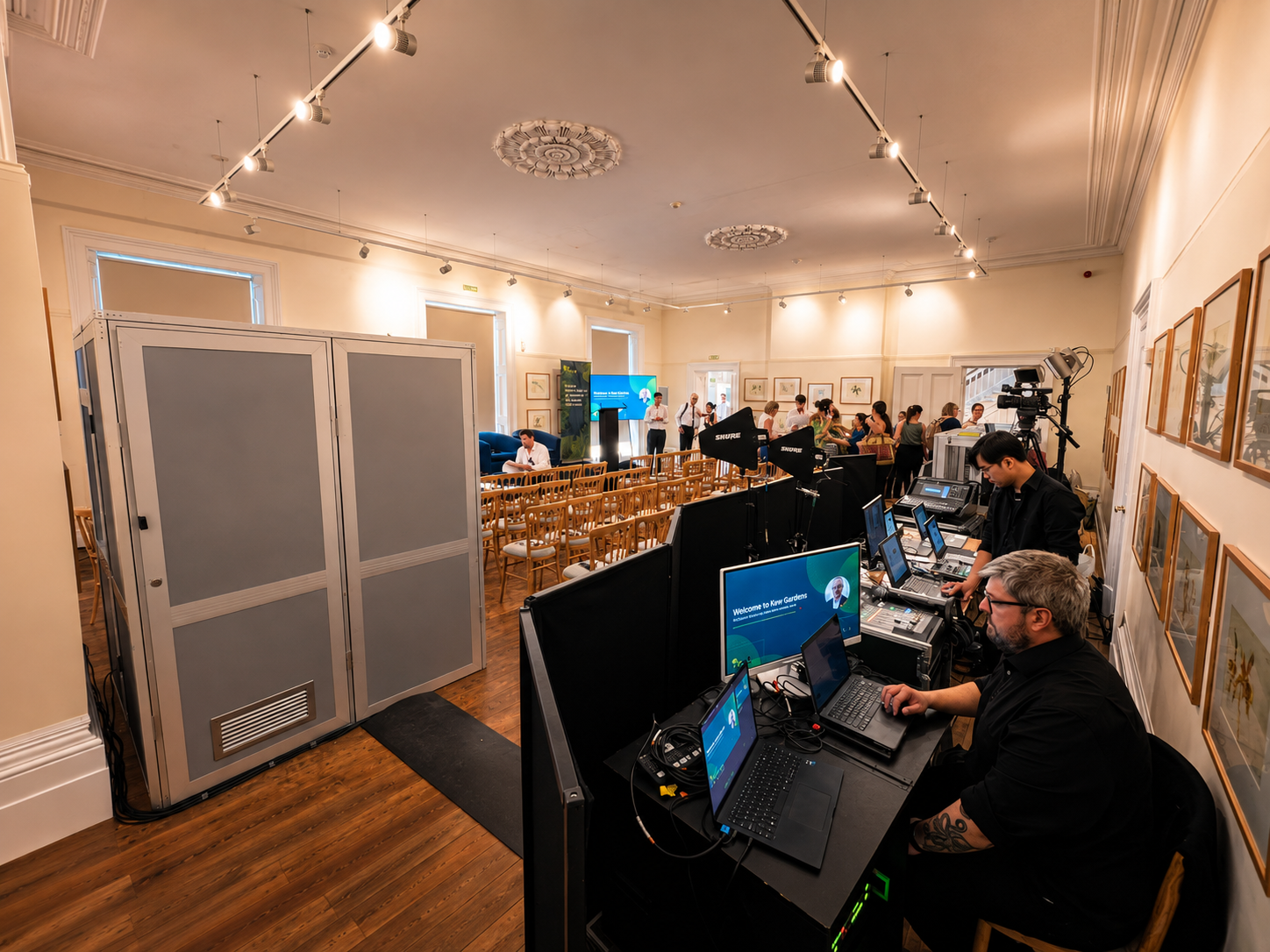
Yes, an interpretation technician makes sure every language at your event is heard clearly. They handle the sound, equipment, and setup so that interpreters and guests can communicate smoothly without technical problems.
If your event brings people from different countries, communication is everything. But clear translation does not happen on its own. Even the best interpreters can’t perform well if the audio fails or the booth is not set up right.
That’s where an interpretation technician comes in. They are the quiet experts behind every successful multilingual event, the ones who make sure your audience hears the right message, in the right language, at the right time. Without them, your event risks confusion, awkward pauses, and embarrassing tech glitches that can hurt your brand’s image. With them, communication flows smoothly, and your event looks professional from start to end.
What Exactly Does An Interpretation Technician Do?
An interpretation technician is responsible for making sure all the technical systems used for translation work perfectly. While interpreters focus on speaking and listening, the technician connects the dots behind the scenes.
Here’s what that means in practice:
- They set up microphones, transmitters, and headsets so interpreters and audiences stay in sync.
- They manage soundproof booths where interpreters work quietly without distractions.
- They test every connection to avoid signal drops or feedback noise. During the event, they monitor all systems live, ready to fix any issue the second it happens.
In short, interpreters deliver the message, but technicians make sure everyone can hear it.
Why is an interpretation technician essential for every multilingual event?
An interpretation technician keeps your multilingual event running smoothly by managing all the sound and translation equipment. They ensure interpreters, speakers, and audiences stay perfectly connected with clear, reliable communication.
1. Seamless AV Integration
Interpretation does not happen in isolation. It connects directly to your event’s audiovisual system. The technician ensures that microphones, consoles, receivers, and transmitters all talk to each other correctly. They eliminate sound delays, background noise, and technical interference, so every listener gets a clear, natural-sounding translation.
When interpretation is smoothly integrated with AV, it feels invisible. Guests don’t notice the technology; they just hear understanding.
2. Real-Time Troubleshooting And Support
Live events are unpredictable. A headset battery can die. A signal may cut out. Or the wrong language channel might play in someone’s ear. An interpretation technician stays alert for these issues throughout the event. If something goes wrong, they fix it immediately, often before anyone even realizes there was a problem.
This kind of real-time monitoring keeps your event running on schedule, prevents stress for interpreters, and maintains audience trust.
3. Proper Equipment Setup
Before your event starts, the technician carefully sets up and tests every piece of interpretation equipment. This includes:
- Making sure soundproof booths meet international standards.
- Checking signal strength across the entire venue.
- Testing microphones and headsets for both clarity and comfort.
This detailed setup process guarantees that interpreters have a quiet, focused environment and that your audience hears every word with precision. When equipment is handled properly, interpreters can work at their best, which means better results for your event.
4. Helping Interpreters Perform At Their Best
Interpreting is one of the most demanding cognitive jobs in the world. Interpreters must listen, process, and speak at the same time, all while keeping up with complex topics and accents.
A technician removes distractions so interpreters can focus fully on their words. During rehearsals, they help interpreters test microphones, adjust volume, and practice with speaker pacing.
This teamwork makes a big difference. When interpreters feel supported, they perform with more accuracy, confidence, and flow, creating a better experience for your audience.
5. Adds Professionalism And Trust
A well-run interpretation system gives your event a polished, credible look. It tells guests that you care about clarity and that you respect everyone’s language.
Even small details, like smooth channel changes or clean sound, show professionalism. In global business meetings or international conferences, that level of care strengthens your reputation and builds trust with partners.
A glitch-free interpretation setup isn’t just technical success; it’s brand success.
6. Prevents Miscommunication And Costly Errors
At high-stakes events, poor sound or broken equipment can cause serious damage. One missed word in a legal hearing, medical forum, or financial meeting can lead to misunderstanding or loss.
An interpretation technician prevents that. They keep communication accurate and consistent, reducing risk and protecting your event from embarrassing or costly mistakes.
When communication is clear, decisions are safer, and your event’s message stays strong.
When Should You Hire An Interpretation Technician?
If your event uses interpreters, you need a technician. It’s that simple.
Here are common examples:
- International conferences and expos.
- Corporate meetings with global teams.
- Medical and legal seminars.
- Government or policy events.
- Hybrid or virtual events that mix in-person and remote attendees.
A good rule of thumb:
If more than one language will be spoken on stage, bring in an interpretation technician early in the planning process. That way, the AV and interpretation systems can be designed to work together from day one.
How Does An Interpretation Technician Support Your Event Team?
Event planners already juggle enough schedules, speakers, venues, catering, and logistics. Adding multilingual interpretation makes things even more complex.
By hiring a technician, you get a dedicated specialist who takes that technical load off your plate. They work closely with your interpreters, AV team, and event manager to make sure everyone’s connected.
Their calm presence also helps during live sessions. If something unexpected happens, such as a mic cutout or signal mix-up, they step in quietly, fix it fast, and keep the session on track.
It’s invisible work, but it’s what keeps everything else running smoothly.
Why Choose EMS Communications For Your Event?
At EMS Communications, we’ve supported events of every size, from small multilingual meetings to large international exhibitions across the UK.
Our interpretation technicians are trained to work hand-in-hand with AV engineers and interpreters. They ensure booths, sound systems, and language channels all operate in harmony.
When you work with EMS, you’re not just renting equipment; you’re working with people who care about your event’s success as much as you do. We handle the tech so you can focus on what matters: your message and your guests.
Every Language Deserves To Be Heard
An interpretation technician is more than a sound expert; they’re the bridge that connects languages, cultures, and people.
They make your event inclusive, professional, and worry-free. So the next time you plan a multilingual event, don’t leave communication to chance.
Contact EMS Communications today to get expert interpretation support and equipment, and make every word count.
FAQs
What Does An Interpretation Technician Do During An Event?
They set up, monitor, and fix all interpretation systems, ensuring interpreters and guests hear each other clearly.
Can I Run Interpretation Without A Technician?
You can, but it’s risky. Without one, a small glitch can stop the translation or confuse the audience.
When Should I Book A Technician?
Book early, ideally when you confirm your interpreters, to allow proper AV planning.
Do They Handle Hybrid Or Online Events?
Yes. Today’s technicians can manage both in-person and virtual setups, syncing sound between live and online audiences.
What Equipment Do They Manage?
Headsets, microphones, consoles, receivers, transmitters, and soundproof booths, basically everything that connects interpreters to listeners.