
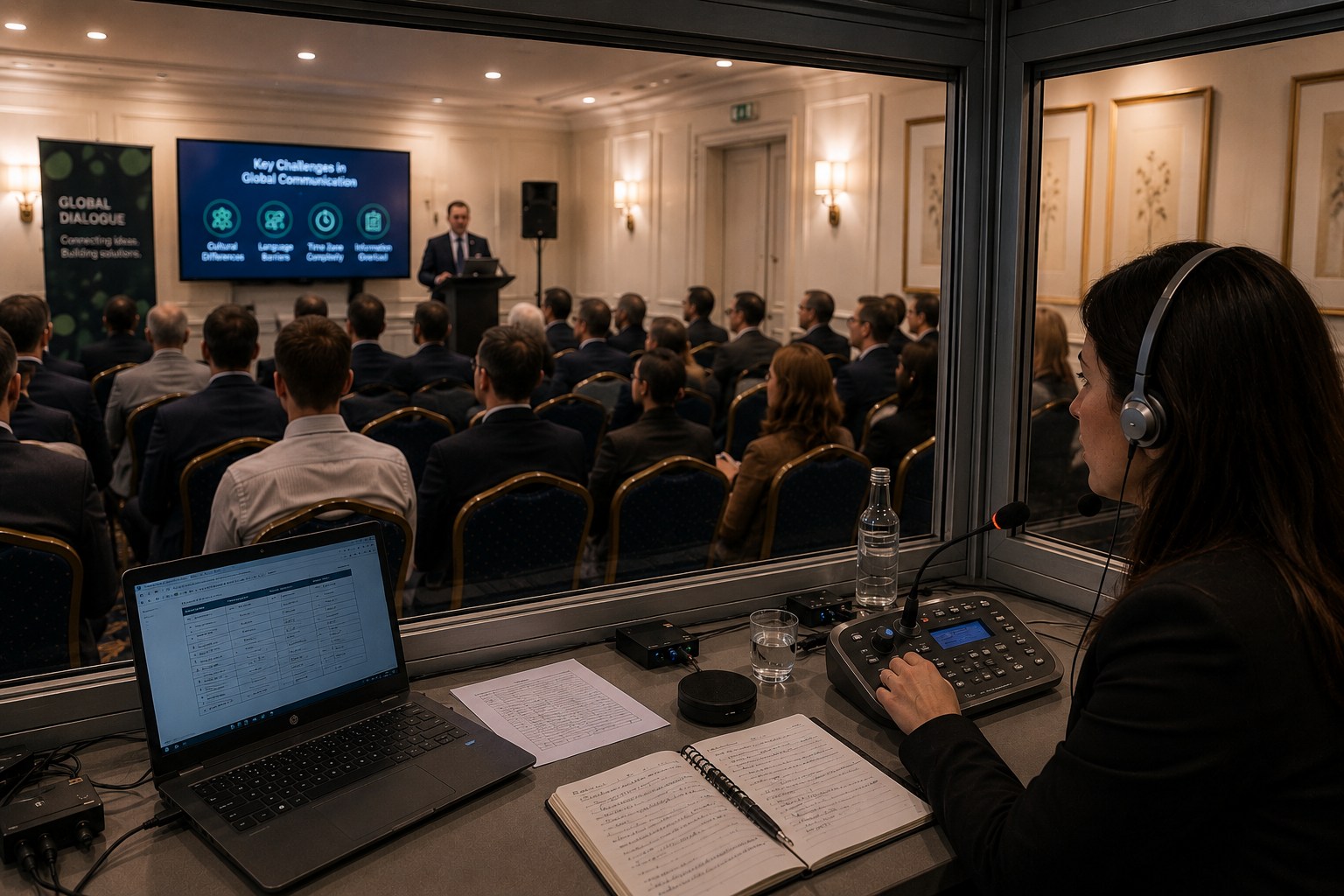
Everything looks flawless: the lights, the stage, the slides. Then the keynote begins, and the interpreters lean forward, straining to hear. The visuals are perfect; the sound isn’t. That single flaw can undo hours of preparation.
In multilingual conferences, even a faint echo or distorted tone can throw interpreters off rhythm. They don’t just listen. They decode, rebuild, and deliver meaning in real time. That’s why acoustic quality isn’t a luxury. It’s the backbone of understanding.
What Acoustic Quality Really Means
Acoustic quality is the way sound travels through a room. It determines whether speech is clear or unclear, warm or harsh. It’s the invisible shape of sound that affects how easily people, especially interpreters, can understand what’s being said.
When rooms echo, or microphones catch noise, clarity drops. Every extra sound competes with the speaker’s voice. For interpreters, that means more effort, more stress, and less accuracy.
Good acoustic quality helps sound move smoothly. Poor acoustic quality turns every word into work.
Why Interpreters Need Exceptional Audio
Simultaneous interpreting is one of the hardest mental tasks in the world. Interpreters listen and speak at the same time, often for hours with little room for error. They rely on perfect sound to hear every tone, pause, and phrase clearly. If one syllable slips, the meaning changes.
Clear, steady sound gives interpreters confidence. It helps them focus on meaning instead of guessing at words. That’s why strong acoustic quality keeps them sharp and reduces fatigue.
How Poor Acoustic Quality Affects Interpreters?
Bad sound doesn’t just annoy people. It exhausts them. Interpreters have to work twice as hard to fill in what they can’t hear, and that stress builds up quickly.
1. Increased Cognitive Load
When the sound is unclear, interpreters use more brainpower just to recognise words instead of translating. That shift slows them down and weakens accuracy.
2. Reduced Accuracy and Comprehension
Blurry consonants or uneven volume make words sound alike. “Thirteen” can sound like “thirty.” Small slips like that can twist entire messages.
3. Higher Stress and Fatigue
Distorted sound tires both the mind and body. Interpreters start feeling tense, get headaches, and lose focus over time.
4. Dual-Task Difficulty
Interpreters must listen and speak at the same time. If there’s an echo or a delay, it breaks their rhythm and timing, like trying to dance to a song that skips.
5. Impaired Speech Clarity
When background noise hides details, interpreters miss subtle cues. It’s like reading through fog, possible, but exhausting.
Why Acoustic Quality Matters for Global Conferences
At big international events, sound quality shapes reputation. When audio is poor, interpreters struggle, and audiences notice. The message feels broken, not because of the speaker, but because of the sound.
Strong acoustic quality makes your event sound professional. It shows care, preparation, and respect for global guests. In multilingual setups, good sound equals trust.
How Event Sound Design Shapes Understanding
Professional sound design makes sure interpreters hear what speakers actually say, not what echoes around the room.
From where microphones sit to how speakers are placed, every detail matters. Clear audio builds confidence and helps everyone, from interpreters to listeners, stay engaged.
Essential Acoustic Requirements for Interpretation
High-quality interpretation depends on strict acoustic standards, often guided by ISO requirements. Every part, from booth walls to headsets, protects interpreters from distortion and delay.
- Soundproof Booths
These booths block outside noise so interpreters can focus fully on the speaker’s voice.
- High-Quality Equipment
Top-grade Av Equipments like wireless microphones and headsets capture sound across a full range (125–15,000 Hz). That makes speech sound natural instead of metallic or flat.
- Optimised Room Acoustics
Soft materials like curtains, carpets, and panels absorb echo. Short reverberation times (0.3–0.5 seconds) keep sound crisp and clear.
Good vs. Poor Acoustic Environments
Interpreters require significantly higher-quality audio than regular listeners to perform effectively. Here’s a quick comparison:
| Factor | Good Acoustic Quality | Poor Acoustic Quality |
| Sound Clarity | Crisp, even tone | Echoes, distortion |
| Interpreter Focus | Relaxed, steady | Fatigued, distracted |
| Accuracy | Consistent | Unreliable |
| Audience Experience | Seamless | Disjointed |
| Event Impression | Professional | Unpolished |
EMS Communications: Setting the Gold Standard
For over 25 years, EMS Communications has helped global brands sound right. Using the Bosch Integrus System, our engineers design precise simultaneous interpretation setups for international events, from business summits to government conferences.
Our Approach
- Tailored conference audio design for every venue.
- Expert AV integration with live monitoring.
- Full-scale support from planning to teardown.
Our Edge
- 15,000+ Bosch devices ready to deploy.
- 24/7 technical support and dedicated project managers.
- ISO-certified soundproof booths, microphones, and headsets.
At EMS Communications, acoustic quality isn’t an upgrade; it’s the baseline.
Real Example: The Sound of Precision
At a European summit, interpreters were losing focus even though the gear was high-end. EMS technicians discovered that the glass walls were reflecting sound. After adjusting mic positions and adding acoustic panels, clarity returned instantly. Within minutes, interpreters relaxed, and accuracy improved. When acoustic quality works, no one notices. When it fails, everyone does.
How to Improve Acoustic Quality at Your Event
- Pick venues with carpets, curtains, or acoustic panels.
- Keep interpreters close to the sound source.
- Avoid hard, reflective walls or ceilings.
- Test the interpretation system before guests arrive.
- Work with AV professionals who understand conference acoustics.
A small setup mistake can lead to hours of frustration. Planning well and soundly early saves energy, time, and reputation later.
Bottom Line
Acoustic quality is the bridge between languages. Without it, even the best interpreters struggle. With it, communication flows naturally. At EMS Communications, we build that bridge every day.
Explore our audio-visual solutions and simultaneous interpretation services to make your next multilingual event clear, smooth, and stress-free.
FAQs
1. Why is acoustic quality vital for interpreters?
Because they need crystal-clear sound to translate instantly and accurately.
2. What damages sound quality at events?
Echo, bad mic placement, low-grade equipment, and untreated rooms.
3. How does EMS Communications ensure clarity?
With Bosch technology, skilled AV teams, and constant live monitoring.
4. What’s the best room setup for interpretation?
Low-echo spaces with carpets, panels, and good noise control.
5. Can poor sound cause interpreter fatigue?
Yes. Bad audio forces interpreters to overwork their brains, leading to stress and burnout.