
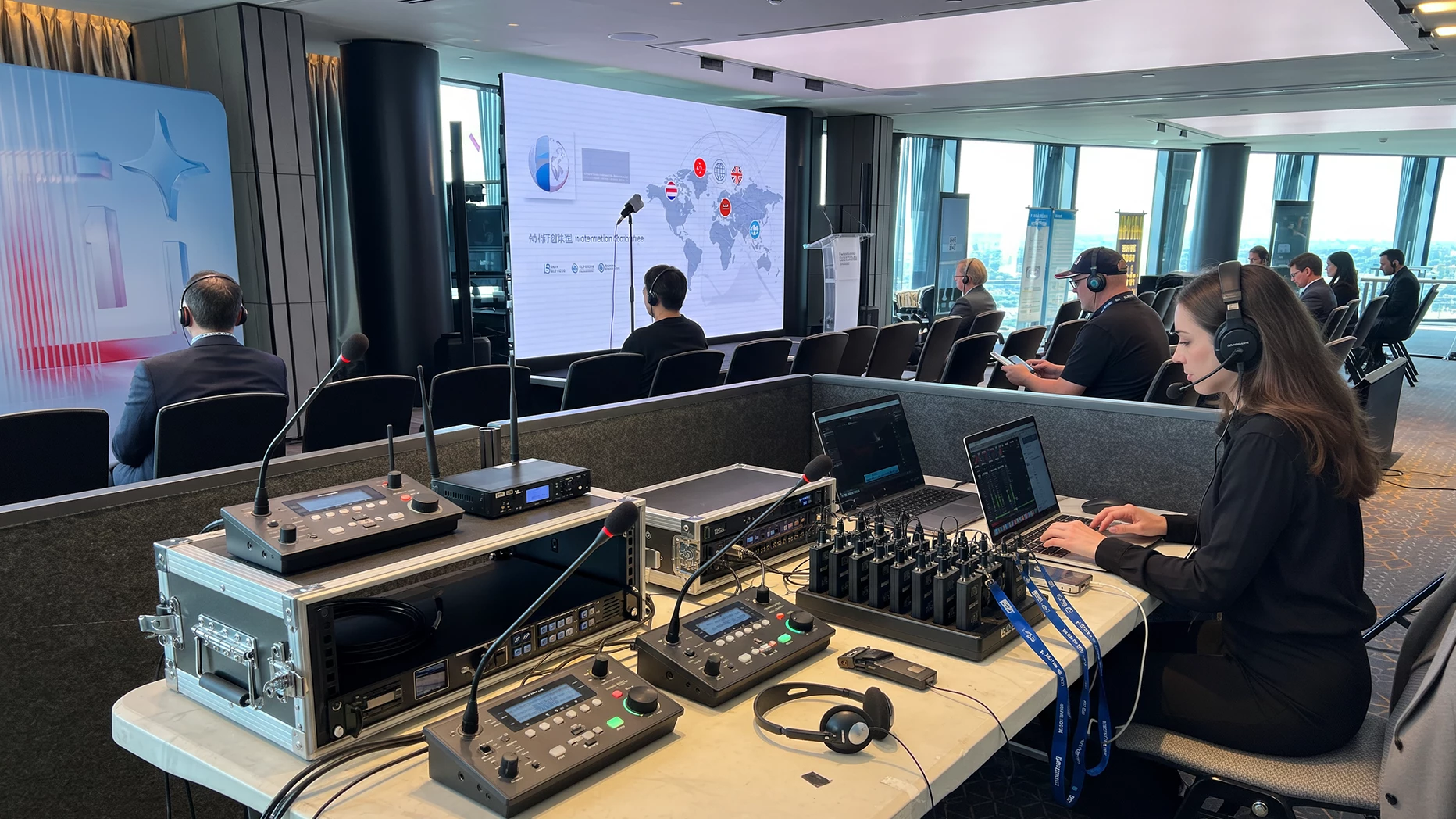
You need an interpretation for an event. Maybe it is a factory tour for overseas visitors. Maybe it is a small board meeting in two languages, or a roving Q&A with no space for a full booth. Hiring a portable interpretation system means renting portable equipment for multilingual events. This can include tour guide systems, tabletop booths, interpreter consoles, receivers, headphones, and infrared language systems.
Event planners use it when guests need live spoken interpretation, but the venue has no fixed interpretation booth. Hiring a portable interpretation system gives you the right kit without a fixed conference setup.
This guide explains the main system types, what is included, what affects cost, and how to brief your supplier. The goal is to help you book the right system the first time.
What Is A Portable Interpretation System?
A portable interpretation system is movable equipment that lets people hear spoken interpretation during an event. It can support walking tours, small meetings, and fixed-seat conferences. The right setup depends on whether your audience is moving, seated, listening to one language, or using several language channels.
Portable interpretation isn’t a single piece of kit. It is a group of systems used for different event formats.
We at EMS Communications supply three main types of portable interpretation kits:
- Tour guide systems for groups on the move.
- Tabletop translation booths for small meetings.
- Portable Bosch Integrus systems for fixed-seat simultaneous interpretation.
A tour guide system uses a handheld transmitter and wireless receivers. The interpreter or guide speaks into the transmitter. The group listens through receivers and headphones.
A tabletop translation booth is a compact booth used in smaller rooms. It helps limit sound. However, it is not fully soundproof like a full mobile booth.
A portable Bosch Integrus setup uses the Bosch Integrus Digital Infrared Language Distribution System. It can include interpreter consoles, receivers, headphones, radiators, and digital transmitters.
The exact setup depends on the room, audience movement, number of languages, and how delegates will listen. That is why planners often compare portable interpretation equipment hire options before deciding between tour guide systems, tabletop booths, or portable Bosch Integrus setups.
Types Of Portable Interpretation Systems Available For Hire In The UK
Most UK event planners choose between three portable systems: tour guide systems, tabletop translation booths, and portable Bosch Integrus setups. Tour guide systems suit movement. Tabletop booths suit small rooms. Bosch Integrus suits fixed-seat events where delegates need clear language channels through receivers.
| System type | How it works | Best for | Audio fidelity | Setup time | Notes |
| Tour guide system | A handheld transmitter sends speech to wireless receivers and headphones. | Factory tours, site visits, museum visits, delegations and walking groups. | Good for clear one-way speech during movement. | Fast when the kit is charged, checked, and allocated. | Not for fixed-seat conferences with long speeches. |
| Tabletop translation booth | A compact booth sits on a table or stand and gives interpreters a focused space. | Small meetings, boardrooms, hotel rooms and short bilingual sessions. | Better than open-room whispered interpreting, but not fully soundproof. | Needs a planned room check and sound test. | Sound-limiting, not a full ISO mobile booth. |
| Portable Bosch Integrus setup | Infrared equipment sends language channels to delegate receivers. Interpreters work from consoles and booths. | Conferences, formal meetings, panels, plenary rooms and multilingual events. | Strongest option for fixed-seat simultaneous interpretation. | Needs planned delivery, install, testing, and derig. | Best when delegates sit and listen through language channels. |
Tour guide systems work well when people move. For example, a group walking through a noisy factory floor needs a simple kit that follows them. The guide or interpreter speaks. The group hears the message through receivers.
Tabletop booths work well in small rooms. For example, a hotel meeting room not have space for a full booth. A tabletop booth gives interpreters more space than open-room whispered interpreting, so portable interpretation booths for small events often make sense for compact meetings with limited floor space.
Portable Bosch Integrus systems work best for formal events. Delegates sit in the room. Each person listens through a receiver and headphones. Interpreters work from consoles, and the system sends the language through the room via infrared radiators.
For fixed-seat meetings, the system usually needs interpreter consoles, receivers, headphones, digital transmitters, and radiators working together. In that setup, the Bosch Integrus equipment range supports clear language channels for delegates who need live interpretation throughout the room.
For formal multilingual meetings, the equipment must deliver clear sound, stable channels, and a smooth listening experience for delegates. That is why Bosch interpretation systems for professional conference use often come up when planners move beyond a simple tour guide setup.
When To Choose Each System Type
Choose the system by event format, not by name alone.
Choose A Tour Guide System When…
- Your group is walking, moving, or visiting different areas.
- The event is a factory tour, museum visit, site walk, or delegation visit.
- The content is short, clear, and mostly one-way.
- The guide or interpreter needs to be heard over background noise.
- You need simple mobile interpretation equipment that UK planners can set up quickly.
Tour guide systems are not a substitute for full simultaneous interpretation at a fixed-seat conference. They are designed for mobile groups and short, focused content. This is why tour guide systems work well for movement but less so for long speeches, panels, and complex conference content.
Choose A Tabletop Translation Booth When…
- Your meeting is small and seated.
- The room has limited floor space.
- The room is quiet enough for interpretation.
- You need a small interpreter space inside the meeting room.
- A full mobile booth will not fit.
Tabletop translation booths limit sound and are not fully soundproof. They suit small meeting rooms. They do not match the acoustic isolation of a full ISO mobile booth.
This matters because interpreters need to hear clearly and speak without disturbing the room. If the booth sits near a kitchen door, coffee bar, or noisy corridor, every sound can make the work harder.
Choose A Portable Integrus Setup When…
Use portable Integrus when delegates are seated and need clear live interpretation through language channels.
- Your audience is seated.
- The event includes speeches, panels, or formal sessions.
- Delegates need one or more language channels.
- You need receivers and headphones for listeners.
- The interpreters need proper booth support and clean audio.
Portable simultaneous interpretation is the best route for fixed-seat multilingual events. It lets the speaker move without pausing. At the same time, listeners hear the message in their own language.
Large rooms need more thought than small meeting spaces. The supplier must consider receiver coverage, radiator placement, room shape, and audience layout. So, choosing a wireless interpretation system for large venues becomes part of the planning before the final kit list is confirmed.
If the equipment also needs professional interpreters, plan simultaneous interpreting services alongside the booth, consoles, receivers, and sound feed.
What Portable Interpretation System Hire Includes
Portable interpretation system hire can include the equipment, delivery, installation, testing, live technical support, and derig. The exact hire depends on the event type, room layout, number of languages, receiver count, access times, and whether you need interpreters with the equipment.
For a tour guide system, the kit includes:
- Handheld transmitters.
- Wireless receivers.
- Headphones.
- Charging cases.
- Carry cases.
- Spare units if agreed.
For tabletop translation booth hire, the hire includes:
- Tabletop booth.
- Interpreter console.
- Interpreter headset.
- Transmitter.
- Receivers.
- Delegate headphones.
- Cables and setup support.
For portable Bosch Integrus hire, this includes:
- Interpreter booth.
- Bosch interpreter console.
- Bosch digital transmitter.
- Signal checks.
- Bosch radiators.
- Channel testing.
- Bosch receivers.
- Bosch headphones.
- Technical support is booked.
A technician is optional for some smaller jobs. However, a technician is strongly advised for conferences, multilingual meetings, and full-day sessions.
The technician sets up the system, tests each channel, checks receiver coverage, supports interpreters, and watches for problems during the event. During breaks, they also check the receiver pool and replace weak batteries before the next session.
Receiver numbers are easy to undercount, especially when some delegates need interpretation and others do not. Before the supplier packs the kit, planners should estimate the number of interpretation headsets and receivers based on language needs, audience size, and session format.
You still need to provide:
- Final agenda.
- Room layout.
- Speaker list.
- Language list.
- Delegate numbers.
- Interpreters, if hiring equipment only.
- Briefing materials for interpreters.
- Floor sound feed from the venue or AV team.
- Delivery, setup, and derig access times.
What Affects The Cost Of Portable Interpretation Hire
The cost of portable interpretation hire depends on the system type, event duration, number of languages, number of receivers, technician support, venue location, transport, and setup windows. A short site tour and a full conference need different equipment, labour, testing, and planning.
The main costs include:
- System type: A tour guide system is simpler than a portable Integrus setup.
- Event duration: A short visit, half-day meeting, full-day event, and multi-day event are priced differently.
- Number of languages: More languages mean more channels, consoles, booths, and interpreter teams.
- Receiver count: More listeners means more receivers, headphones, charging, handouts, and collection planning.
- Technician support: Live support adds cost but lowers event risk.
- Venue location: Transport, parking, stairs, lifts, and loading access all matter.
- Delivery and derig windows: Tight access need extra planning.
- Room layout: Long rooms, pillars, balconies, and split spaces can affect signal planning.
Room layout affects more than comfort. It can change booth position, cable routes, interpreter sightlines, and radiator coverage, so consider where interpretation booths go in different venue layouts before signing off on the room plan.
There is no single cost that fits every event because each setup depends on duration, language count, receiver numbers, technical support, and venue access. Planners usually get a clearer budget once they understand the main factors behind the cost of hiring interpretation equipment.
How To Brief A Portable Interpretation Supplier
Brief your supplier in writing before asking for a final quote. A clear brief helps them choose the right system, avoid the wrong kit, plan the receiver count, assign the right technician support, and spot missing details before the event day.
Use this checklist:
- Event format
Say whether it is a walking tour, fixed-seat conference, board meeting, training day, workshop, or hybrid event.
- Languages
List each language pair. For example, English to French or German to English.
- Audience size
Share how many people need receivers. If you know the split by language, include it.
- Venue and room layout
Send the venue name, address, room name, floor level, loading access, and layout plan.
- Schedule
Include the date, access time, soundcheck time, start time, breaks, finish time, and derig window.
- Interpreter sourcing
Say whether EMS Communications is supplying interpreters or whether you are bringing your own.
- Briefing materials
Share slides, scripts, speaker notes, acronyms, topic notes, and names as early as possible.
A clear brief helps the supplier quote the right system, but formal events need more detail for procurement. When the job involves several suppliers, languages, rooms, or approval steps, it helps to know what to include in an RFP for interpretation services and equipment hire.
For event planners, supplier confidence matters as much as the kit. Before sharing a detailed brief, it can help to understand the team behind the service, especially when the event involves several languages, tight access times, or a formal conference setup.
Common Mistakes Event Planners Make With Portable Interpretation
Most portable interpretation problems come from choosing the wrong system, sending late information, undercounting receivers, ignoring room noise, or skipping technical support. These mistakes are easy to avoid when the brief is clear, and the system matches the event.
- Specifying a tour guide system for a fixed-seat conference.
- Choosing a tabletop booth for a noisy room.
- Forgetting receiver handout, collection, and battery checks.
- Sending slides and speaker notes too late.
- Not booking a technician for a complex multi-language event.
Where To Go From Here
Portable interpretation works best when the system matches the event.
- Use tour guide systems for moving groups.
- Use tabletop booths for small rooms.
- And use portable Bosch Integrus setups for fixed-seat multilingual conferences.
Once the event format, venue, languages, receiver numbers, and timings are clear, the next step is to request a quote based on the actual setup your event needs.
FAQs
What Is A Portable Interpretation System?
A portable interpretation system is movable equipment that delivers spoken interpretation to listeners during an event. It includes transmitters, receivers, headphones, interpreter consoles, booths, and infrared radiators. The right setup depends on whether your event is a tour, a small meeting, or a fixed-seat conference.
What Is The Difference Between A Tour Guide System And A Tabletop Translation Booth?
A tour guide system is for moving groups. A speaker or interpreter uses a transmitter, and guests listen through receivers. A tabletop translation booth is for a small fixed room. It gives interpreters a sound-limiting space, but it is not the same as a full booth.
Can Portable Interpretation Work For Large Conferences?
Yes, portable interpretation can work for larger conferences when the right booth, console, receiver, radiator, and channel plan is used. A portable Bosch Integrus setup suits fixed-seat events where delegates need clear language channels. A tour guide system is not the right choice for that format.
How Much Does It Cost To Hire A Portable Interpretation System In The UK?
The cost depends on the system type, event length, number of languages, receiver numbers, technician support, location, and access times. A short tour costs differently from a full conference setup. The safest next step is to send your event brief and request a quote.
Do You Need An Interpretation Technician For A Portable System?
You not need a technician for a very small tour guide setup. For conferences, multi-language meetings, or events with many participants, a technician is strongly advised. They set up the kit, test channels, monitor batteries, fix issues, and keep the system working during the event.